
Jack Douglas’s History With John Lennon
Producer Jack Douglas had a long and close working relationship with John Lennon. Their collaboration began in 1971, when Douglas was hired to produce Lennon’s album Imagine. Over time, the two became close friends.
Years later, after Lennon stepped away from music for about five years, he personally reached out to Douglas again. Lennon asked him to produce his comeback album, Double Fantasy, which he recorded alongside his partner Yoko Ono.
John Lennon’s Defining Trait as a Musician
While appearing on Billy Corgan’s YouTube show, Douglas was asked what stood out most about Lennon as a musician. He explained that Lennon had complete confidence in his voice and performances. Lennon usually recorded vocals live, often in just a few takes, and then trusted Douglas to handle the rest without interference.
Douglas said Lennon clearly respected the line between performer and producer, allowing the process to move smoothly and efficiently.
“We did live vocals for everything. I mean, that vocal was perfect. It’s just that he’s in there singing and playing at the same time. It’s perfect. He’s playing, he’s singing, it’s what he does, perfectly. His talent was enormous. His mic technique was incredible.”
“And also, he drew a line – which was very nice – between me as the producer and him as the performer, so that he’d do four vocals, maybe five, if I needed a little patching up here and there. And then he’d leave, ‘you figure it out when you get to call me, and I’ll come out of the room and double it.’ And that’s all it was.”
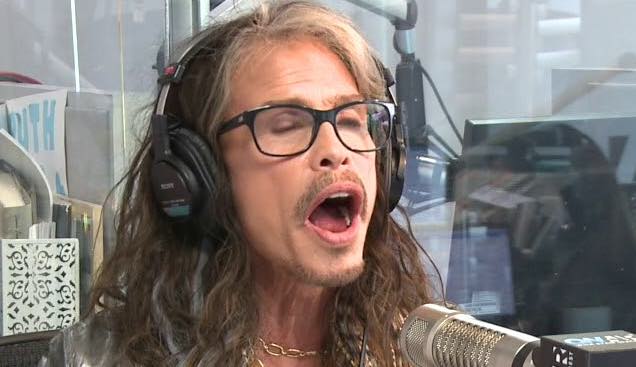
How Lennon Differed From Steven Tyler
Douglas also compared Lennon to Steven Tyler of Aerosmith. He explained that Tyler was deeply hands-on and detail-focused, often leaning over the producer and questioning tiny vocal sounds. Lennon, by contrast, trusted that the recordings were good and did not micromanage.
Douglas said Lennon only fully realized he had a finished record after hearing the final vocal on “Watching the Wheels,” at which point he confidently knew the album was complete.
“Steven would be leaning over you, ‘That ‘S’ could be better. Do we have another ‘S’? How about that ‘T’?’ He’d be micromanaging every inch of it, especially when it got to Pro Tools. But John was like, he knew that they were all good, that they were all relatively good.”
“He didn’t know that we had a record until he heard the vocal back on ‘Watching the Wheels.’ He was still not sure. But when he heard that back, he was like, ‘Brother, you tell ’em we have a record.'”