
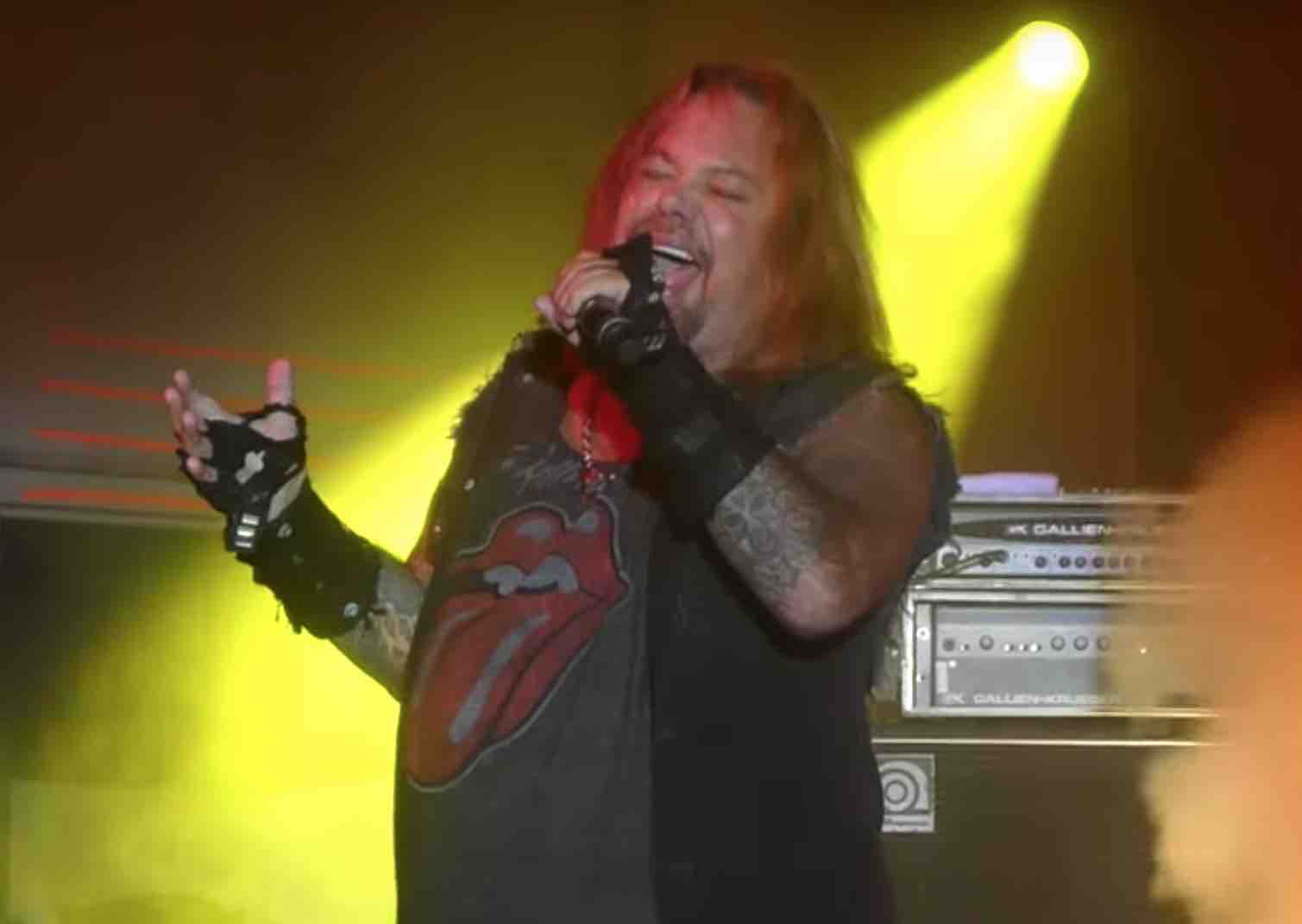
Former Rainbow keyboardist Tony Carey recently reignited the long-running debate about backing tracks in arena rock, alleging that Mötley Crüe use “flown-in” vocals during concerts and that modern productions have moved away from the spontaneity of classic rock.
In an interview published on Classic Album Review, Carey slammed the wider industry trend toward click tracks and pre-programmed elements, arguing that high ticket prices create pressure for shows to be perfectly timed and repeatable, with him saying:
“It’s not rock and roll anymore,” Carey said. “And I’m not sure that there is rock and roll anymore because when you get to the point where you’re charging 200 bucks for a ticket, like big shows like I mean even Foo Fighters or more the pop shows, Robbie Williams or Adele. Take it take us to four or five hundred bucks. It’s got to be right.”
Carey then singled out Mötley Crüe, claiming the band rely on pre-recorded material beyond backing vocals. He said he has seen footage of drummer Tommy Lee where a cymbal crash was audible even though Lee “didn’t make his symbol crash,” and added that safety and staging risks in modern spectacles mean everything from lighting cues to explosions must stay locked to the same timing system.
“And it’s not just flying in vocals, which is what Mötley Crüe does and sometimes the whole band,” he continued. “I mean, I’ve seen Tommy Lee caught on film where he didn’t make his symbol crash that that you could clearly hear.”
“It’s everything is synced to this click track including lighting cues and explosions and it can be really dangerous to be on in one of these worked out shows to be on the stage in the wrong place at the wrong time when an explosion goes off,” Carey said. “It’s not just up to chance. And in the 70s and 80s that was rock and roll that I mean we just went out and played you know and if the drummers really excited we play the songs too fast. Who cares?”
He contrasted that approach with the way rock bands operated in the 1970s and 1980s, when musicians could change setlists on the fly and tempos could speed up if the moment felt right. Carey described today’s arena shows as a tightly controlled business, with complex staging such as moving platforms and elevators requiring strict cues so performers and crew are not put in danger.
“But these days it’s much more of a business and it’s more like putting on a Broadway show,” he said. “It has to be choreographed down to where they don’t change the set. In the old days we could change the set list. We were like, ‘No, I don’t want to play that tonight. Let’s play this, you know. Okay. 1 2 3 4 we play that.’”
“Today it’s all programmed into computers and things have to work,” he continued. “There are like elevators in the stage, you know, where like Billy Eilish comes up and the thing throws her up. Imagine she missed her queue. You know, it could kill her. And if you’re underneath that stage where these elevators go up and down, it can kill you.”
“And so it’s a very professional, let’s put that professional way to present your music,” Carey concluded. “Whereas rock and roll is the least professional thing.”
No response from Mötley Crüe was cited in Carey’s remarks. The claims arrive amid earlier public arguments about the band’s live setup, including allegations made by former guitarist Mick Mars after his departure, and subsequent pushback from bassist Nikki Sixx about the group using what he has called “audio enhancements.”