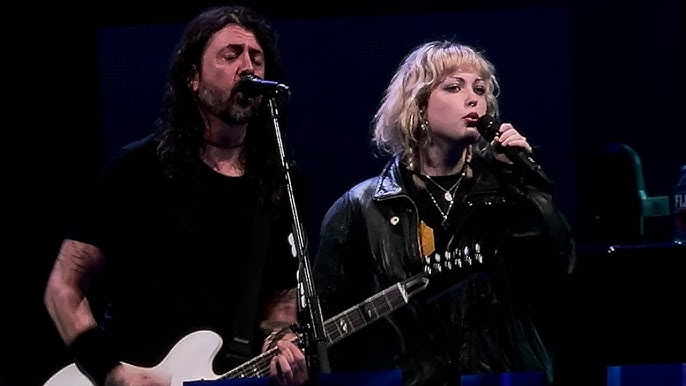
Violet Grohl recently addressed “nepo baby” criticism head-on, saying she understands the advantages that come with being the daughter of Foo Fighters frontman Dave Grohl but wants audiences to judge her on her own work. In an interview with The Forty Five, the young singer and songwriter said she has heard the label for years and no longer takes it personally.
Violet said she does not deny that her surname can create opportunities, adding that she is not interested in arguing with people who point it out.
“Obviously, doors are open for me because of my last name. It’s not something I’m ever going to hide behind or say, ‘No, I worked so hard for this! You guys shouldn’t say that! That hurts my feelings.’ I don’t care — I really don’t,” she said.
She added that the comments have been around since she was 13 and that her main hope is simply to be given a fair chance. Violet also described being around musicians as a privilege that has helped nurture her interest and allowed her to develop as an artist.
“I’ve heard that since I was 13 years old. So call me a nepo baby all you want. It’s ‘whatever’ to me. I just hope that eventually people will give me a shot,” she continued.
“It’s such a privilege to be able to be around musicians and in a space that nurtures my interest and allows me to grow and to make a record,” she said.
The young musician concluded by inviting critics to judge her work on its own merits.
“Come see me live. Come listen to my music and then you can decide for yourself if I’m worthy of this career or not. This is my passion, this is my thing – and it’s all I want to do,” she stated.
In the same conversation, she urged sceptics to base their opinion on her performances and songs rather than her family background, saying, “Come see me live. Come listen to my music and then you can decide for yourself if I’m worthy of this career or not.” Her remarks arrive amid continued public discussion about the role family connections play in entertainment, including after Dave Grohl denied he got his daughter a record deal in past comments.
Violet’s response reflects a wider reality for second-generation musicians: they may benefit from proximity to the industry, but they also face persistent scrutiny over whether their opportunities were earned. For now, she appears focused on moving the conversation away from labels and toward the music itself.