
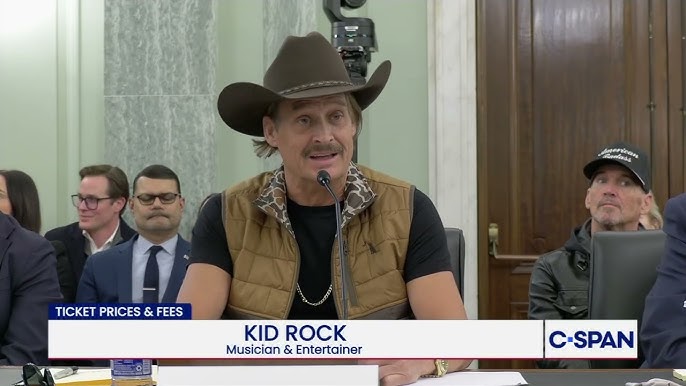
Kid Rock recently called for a price cap on resale tickets for live music and sporting events, arguing that fans and artists have been “getting screwed” by a system that drives up prices and offers little benefit to performers.
Kid Rock talks about price cap on tickets
“I’m here because hardworking Americans who love live music deserve better, and artists deserve control over their own work,” Kid Rock, whose real name is Robert Ritchie, told lawmakers during a Senate Commerce, Science and Transportation subcommittee hearing. Kid Rock’s testimony brought back memories of Pearl Jam’s 1995 testimony to congress about Ticketmaster’s prices and monopoly. Kid Rock himself even called out Pearl Jam for not being with him against Ticketmaster this time around recently, claiming that they have ‘Trump Derangement Syndrome.’
Kid Rock called out the 2010 merger of Live Nation and Ticketmaster, which together control roughly 70 to 80 percent of the ticketing market for major U.S. concert venues — as a “monopoly dressed up as innovation,” saying it did not deliver on stated promises of increasing competition, lowering prices and helping performers.
— KidRock (@KidRock) January 28, 2026
He suggested that the merger led the “economic foundation that supported artists in the past [to crumble],” pointing to concerns about piracy and secondary ticketing.
“Needless to say, that experiment has failed miserably. Independent venues have been crushed. Artists have lost leverage. Fans are paying more than ever and getting blamed for it,” Kid Rock said.
He then called for artists to have more control over their ticket inventories and how they are sold, advocating for a 10 percent price cap in the resale market to curb price gouging and a ban on speculative pricing.
He also urged committee members to subpoena contracts and deals between artists, promoters, buildings, ticketing companies, agencies, and vendors, suggesting they would find “mountains of fraud and abuse.”
Lawmakers have been pushing to regulate speculative pricing, a deceptive practice in which resellers list tickets that they do not yet own for sale on secondary platforms, for several years.